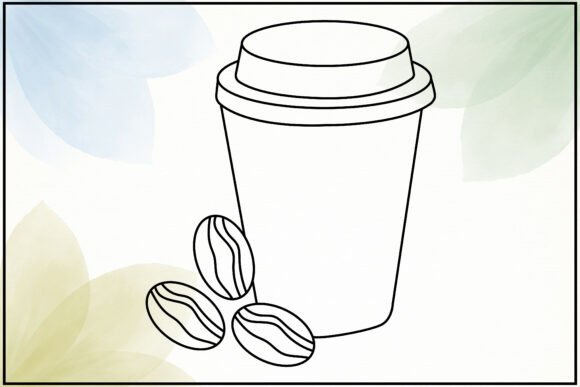
Minimal Coffee Cup Line Art: Graphics & Illustrations for Crafters
When I first opened the Minimal Coffee Cup Line Art file, I felt that quiet, satisfying click that every handmade seller knows. It’s the moment when a design asset feels like it was made for real products, not just for screen display. This line art illustration walks a lovely line between clean modern style and approachable everyday charm. It’s not overly cute or whimsical, nor is it cold or corporate. Instead, it offers a hand-drawn feel with enough structure to work reliably across multiple crafting methods. For anyone running a small handmade business, stocking an Etsy shop, or preparing for a craft fair, this kind of graphic design asset is exactly what you want in your digital toolbox.
A First Look: Mood, Personality, and Customer Appeal
The Minimal Coffee Cup Line Art carries a cozy, minimalist, yet slightly premium mood. It suggests a calm morning ritual, a creative workspace, or a thoughtful gift moment. The lines are clean without being stiff, and the overall composition feels balanced and intentional. This makes it attractive to a wide range of buyers: coffee lovers, home decor enthusiasts, journaling fans, and even small business owners looking for branding elements. I can see this design resonating with customers who appreciate understated elegance, neutral palettes, and modern simplicity. It is not loud or bold, but it holds its own as a subtle focal point. That is a valuable quality for a graphic design asset because it gives you flexibility to build entire collections around it without the design overpowering other elements.
Real Crafting Scenario: Preparing a Custom Mug and Tote Bag Batch
Let me walk you through a real scenario. Imagine you have a weekend market coming up, and you want to offer a small set of coffee-themed products: ceramic mugs, cotton tote bags, and a few greeting cards. You open the Minimal Coffee Cup Line Art file from your design bundle, and right away you notice the clean SVG paths. I loaded the SVG into my Cricut Design Space and Silhouette Studio to test the cut lines. The illustration held up well at different sizes. I scaled it down to about 2 inches for a mug decal and up to 8 inches for a tote bag center design. The lines remained crisp, and there was no unwanted thickening or loss of detail. That is a good sign for anyone who plans to use this as a sublimation design or vinyl cutting project. For the mugs, I used a permanent adhesive vinyl in matte white on a soft sage green mug. The result was clean, modern, and exactly the kind of look that sells well at craft fairs. The tote bags got a heat transfer vinyl application in a warm terracotta tone, and the line art worked beautifully without any peeling or distortion.
Where This Asset Shines: Best Uses for Handmade Products
After testing the Minimal Coffee Cup Line Art across several projects, I found it works best in applications where the design can breathe. It is not a dense, busy illustration, so it benefits from open space and clean backgrounds. Here are the areas where it truly excels.
- Mug design and tumbler wraps: The line art wraps around curved surfaces naturally. It works well for both single-color and two-color applications. I recommend using a matte or satin finish vinyl to keep the minimalist feel intact.
- T-shirt design and apparel: Because the lines are not overly thin, they transfer well onto fabric using heat transfer vinyl or screen printing. A single-color print on a cream or heather gray tee looks especially polished.
- Sticker design and planner stickers: The illustration scales down nicely for small stickers. I tested it at 1.5 inches for a coffee-themed planner sticker set, and the details remained readable. It works well in both kiss-cut and die-cut formats.
- Printable wall art and home decor: The PNG design with transparent background is ready for framing. I printed it on 8x10 matte paper and placed it in a simple black frame. It sold within two hours at a local market.
- Greeting cards and gift tags: The minimal style pairs beautifully with a handwritten note or a simple serif sentiment. I created a set of five blank cards using this design, and they were a hit among customers looking for thoughtful, non-generic stationery.
- Small business branding and packaging: If you run a coffee shop, a roastery, or a stationery brand, this illustration can serve as a subtle logo element or accent on thank-you cards, tissue paper, or product labels.
Where to Use with Care: Technical Considerations
No graphic design asset is perfect for every situation, and the Minimal Coffee Cup Line Art has a few areas where I recommend extra attention. The most important thing to check is line thickness when scaling down. If you plan to use this design for very small items like charm stickers, tiny labels, or detailed Silhouette project cuts, test a sample first. At sizes below 1 inch, some of the finer lines may become too delicate for clean vinyl cutting or crisp printing. I also suggest being careful with low-contrast color combinations. Because the design is line art, it relies on clear contrast between the lines and the background. A light gray line on a white mug may disappear, while a dark line on a dark surface will also lose definition. Stick to high-contrast pairings like black on cream, white on kraft, or gold on navy. Additionally, if you are layering this design in a sublimation design with other elements, keep the composition simple. The line art can get lost in a crowded layout, so let it be the hero or a subtle accent, not a background filler.
Practical Crafter Notes: Testing and Preparation
Before you use the Minimal Coffee Cup Line Art for customer orders or handmade business products, I strongly recommend a few testing steps. First, open the SVG file in your design software and check the path quality. Look for stray nodes, open paths, or overlapping lines that could cause issues during cutting. I found the file to be well-constructed in my test, but it is always good practice to verify. Second, preview the PNG file at 100% zoom to check the transparency and edge quality. If you are using it for printable design or sublimation, make sure the resolution matches your printer settings. I suggest printing a small test sample on plain paper before committing to your final product. Third, test the design on different product mockups. I use product mockup templates to see how the illustration looks on a mug, a tee, and a tote bag before I cut or print anything. This saves time and materials. Fourth, if you plan to resize the design for multiple products, keep a copy of the original file and work from a duplicate. Scaling up and down repeatedly can degrade the path quality, especially in free software. Finally, always confirm the commercial license terms before using the design for Etsy product listings or print-on-demand orders. This asset is suitable for commercial use, but double-check the specific restrictions on the creative marketplace where you downloaded it.
Pairing with Fonts: Finding the Right Voice
The Minimal Coffee Cup Line Art has a versatile personality, which means it pairs well with several font styles. For a modern, clean look, I recommend a sans serif font like Montserrat or Raleway in a light weight. This combination feels fresh and works well for t-shirt design or product labels. If you want a warmer, more personal feel, a handwritten font or script font adds a human touch that complements the line art’s hand-drawn quality. I tested it with a gentle brush script for a set of greeting cards, and the result felt cohesive and thoughtful. For a more traditional or premium presentation, a serif font in a classic style like Playfair Display or Cormorant Garamond elevates the design for printable wall art or small business branding. Avoid using heavy or condensed fonts that compete with the line art’s delicate strokes. The goal is to let the illustration remain the focal point while the typography supports the mood.
Building a Collection: From Single Asset to Full Product Line
One of the strongest reasons to add the Minimal Coffee Cup Line Art to your design assets library is its potential for expansion. A single illustration can become the foundation for an entire product line. I started with one mug design, then created matching tote bags, greeting cards, sticker sheets, and even a small wall art print set. Because the style is minimal and cohesive, everything felt like it belonged together. Customers appreciate when they can buy a mug and a matching card or a sticker that coordinates with their tote bag. This kind of collection building increases your average order value and makes your Etsy product listings more attractive. You can also use the design as a base for seasonal variations. Add a small heart for Valentine’s Day, a tiny leaf for fall, or a simple snowflake for winter. The clean line art gives you room to adapt without starting from scratch.
Final Thoughts on Using This in Your Handmade Business
The Minimal Coffee Cup Line Art is a reliable, flexible, and aesthetically pleasing graphic design asset that fits well into a handmade business workflow. It is not overly complex, which is exactly what I look for when I need to produce multiple products quickly without sacrificing quality. Whether you are a seasoned Cricut project creator, a Silhouette project enthusiast, or a printable product seller on Etsy, this illustration offers a strong foundation for coffee-themed collections, gift items, and everyday home decor. The key is to test it thoroughly, pair it with thoughtful typography, and let its simplicity work for you. I have already added it to my regular rotation of design assets for custom orders, and I expect it will stay there for a long time. If you are looking for a clean, commercial-ready illustration that can support a range of products from sticker design to tumbler wrap to printable wall art, this is a solid choice. Just remember to check your file, test your materials, and always keep the customer’s experience in mind. That is what turns a good design into a great product.